


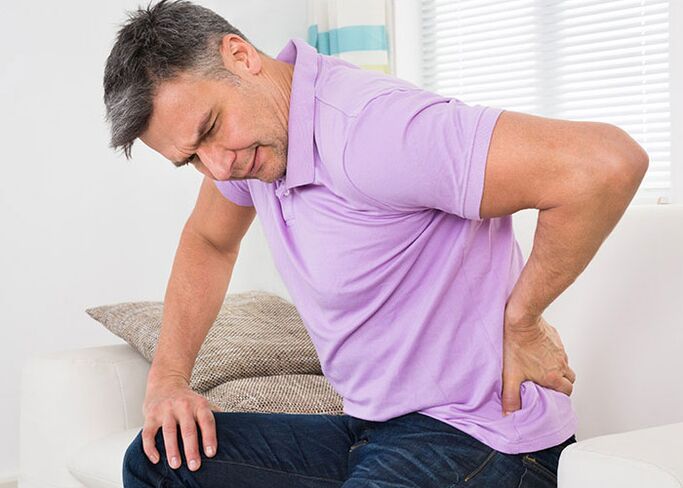
Many people on the planet have experienced lower back pain at least once.According to statistics, only 10% of the population do not know what pain in the lower back is.In recent years, lumbago in the lumbar region began to appear in patients at a young age, not only after intense physical activity, but also with various diseases.
Species
Isolated cases of lower back pain usually do not cause concern.Frequent hypothermia, hard work, and heavy lifting can provoke destructive changes in the spine.The occurrence of pain is a sign of the development of a pathological process that must be treated in order to maintain full motor ability.
Finding out the nature and intensity will help you figure out why the unpleasant sensations appear.An accurate determination of the pathology will help in prescribing effective treatment to eliminate pain.
Depending on the duration of action, lower back pain can be:
- acute – occurs suddenly, is accompanied by high intensity, the duration of the symptom does not exceed thirty days, and is often aching in nature;
- chronic – the patient worries for more than six months, the pain is constant, not severe, signals old processes in the body;
- periodic – appears during the acute stage, disappears completely with the advent of the remission period;
- Constant pain accompanies many conditions that require immediate treatment, these can be pathologies of the spine, nervous system, vascular damage, and oncological tumors.
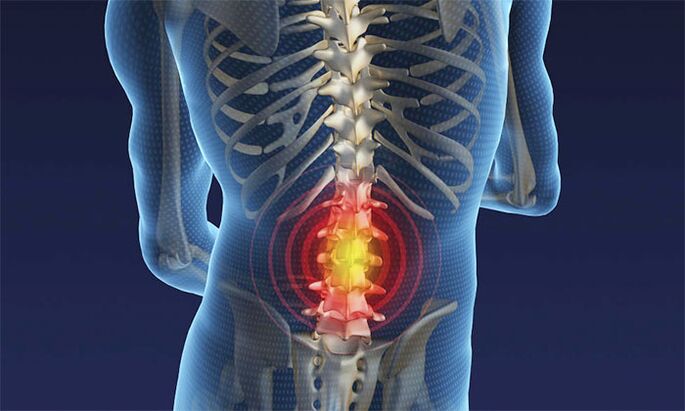
A person may feel pain in one point or throughout the back.Based on the location, one can distinguish local pain, which does not extend beyond the boundaries of the lesion, or generalized pain, which covers the entire lower back.
Sometimes the pain spreads to the lower limb, causing a forced position when moving.This symptom occurs with serious disorders in the spine.The reflected nature of pain occurs in diseases of the gastrointestinal tract or gynecological problems.
Reasons
Non-pathological etiology may include severe lower back pain after prolonged physical activity.The accumulation of lactic acid in the muscles produces a painful effect that goes away on its own after a few days.
Main reasons:
- Dystrophic changes in the cartilage tissue of the lumbosacral vertebrae (osteochondrosis) are complicated by the proliferation of bone tissue and loss of elasticity of the flattened cartilage.Lower back pain worsens when the intervertebral disc is deformed, a complication of which is an intervertebral herniation.This condition causes increased pain that spreads to the hip and sometimes is reflected in the ankle area.
- Traumatic injuries due to impact or fall.
- Shortening of one limb is observed in coxarthrosis of the second and third degree, after injury or surgery, individual characteristics at birth, and high-grade scoliosis.
- Hypothermia leads to myositis.Inflammatory phenomena in muscle fibers cause widespread, constant pain.
- Radiculitis is a neurological pathology based on inflammation of the root of one of the spinal nerves.A sudden sharp pain pierces the patient, forcing him to bend over.
- Scoliotic curvature of the spine.
- Thrombophlebitis is damage to the vessel wall with the formation of a blood clot; with this pathology, a pain effect is also observed in the lower limb.
- Advanced forms of atherosclerosis with circulatory disorders.
- Inflammatory kidney diseases.
- Gynecological pathologies, pain originates in the lower abdomen and spreads to the lower back.
- Hormonal disorders in the body in women during menopause.
- Inflammation of the prostate gland in men.
- Rheumatoid arthritis.
- Infectious diseases: tuberculosis, brucellosis and some others.
- Pancreatitis and cholecystitis provoke referred pain in the lower back.
- Malignant neoplasms in the lumbosacral region or abdominal cavity.
Diagnostic measures
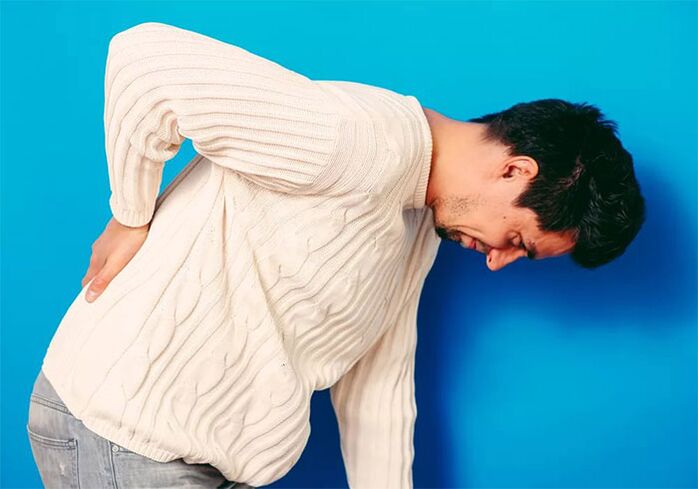
Understanding why your lower back hurts is important for permanent relief from pain.An experienced doctor should carry out the diagnosis.At the appointment, a medical history is collected, complaints are listened to and the patient’s heredity is clarified.
Visualization and palpation are carried out to identify deformed areas on the spine and localize the most painful place in the lower back.
To confirm the assumption, the following procedures are carried out:
- laboratory analysis of blood and urine to determine possible inflammation in the body;
- biochemical blood test for indicators of a possible rheumatological factor;
- X-ray examination of the spine will determine the presence of a hernia or protrusion;
- ultrasound examination of blood vessels and pelvic organs;
- computed tomography of the spinal column;
- An examination by an infectious disease specialist, rheumatologist, phthisiatrician or gynecologist is scheduled if necessary.
Treatment
Taking painkillers will have a short-term effect, after which the lower back pain will return again.Treatment measures should consist of a set of primary and auxiliary treatment procedures.
A sudden attack requires immediate help.Actions to help alleviate the condition:
- take a pain reliever;
- wrap the lumbar area tightly to create compression on the sore spot;
- contact a medical specialist for qualified help.
At the moment of acute pain, if there is no accurate diagnosis, it is forbidden to try to warm the sore lower back so that the inflammation does not increase.It is not recommended to conduct a session of therapeutic massage and manual therapy during an exacerbation.
Medicines
- Nonsteroidal anti-inflammatory drugs will relieve lower back pain and eliminate inflammation by regulating body temperature.Only a doctor can prescribe medications.Uncontrolled use of non-hormonal painkillers leads to irritation of the gastric mucosa.Taking a medication that inhibits the secretion of gastric acid half an hour before NSAIDs will prevent the pathological condition.
- Glucocorticosteroids are prescribed for severe inflammatory reactions.
- Diuretics will relieve swelling by removing excess fluid, which will reduce pain.
- Muscle relaxants will relieve spasms and relax skeletal muscles.
- Chondroprotectors to prevent destruction in the spine.
- Antibiotics for inflammation of internal organs.This pharmacological group disrupts the balance of intestinal microflora.Probiotics will help prevent the appearance of dysbiosis.
- To strengthen the walls of blood vessels.
Local treatment
Medicines intended for local treatment will help relieve pain.Ointments and creams for external use may contain active ingredients: non-steroidal anti-inflammatory painkillers, viper, cobra, viper, scorpion venom.
Patches with a medicinal base are convenient for use during the day.The pepper patch is applied directly to the lower back, and within several hours there is a uniform therapeutic effect on the sore area.
Kinesio tape is a type of pain relief.Taping gives an immediate effect; if done correctly, it can remain on the skin for up to 5 days, providing lasting pain relief.
Orthopedic products include wearing a rigid lumbosacral corset.The bandage is designed for static loads, provides support for the lumbar area, and relieves pain due to compression.For radiculitis, warming corsets with the hair of a dog, camel, or llama are prescribed.
Physiotherapy
Phonophoresis with lidocaine provides rapid symptom relief by quickly penetrating a strong anesthetic into the deep subcutaneous layers.The safe method does not have a negative effect on the gastrointestinal tract, which is an additional advantage.
Massage is effective during the painless period.After the course, blood circulation improves, the muscular system is toned, and mobility in the lumbar area improves.
Acupuncture allows you to apply acupuncture to certain points for the purpose of treatment and prevention.The Kuznetsov applicator is perfect for home use.Plastic needles increase blood flow and trigger natural pain relief processes.
Magnetic therapy is used to treat many diseases, including osteochondrosis, vascular pathologies, and gynecological diseases.The pulsed current penetrates 7 cm under the skin, reaching damaged areas.The therapeutic effect is cumulative, achieved by the end of the first course and maintained until the next session.
Prevention
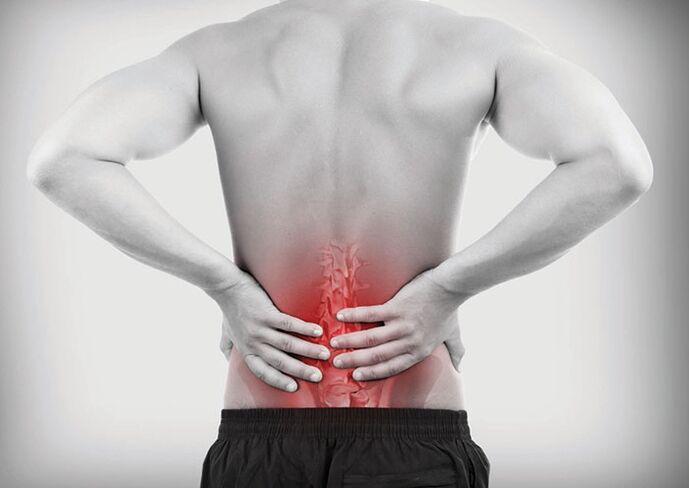
To keep your lower back healthy, you will need to follow the well-known rules:
- lead an active lifestyle;
- avoid heavy loads during professional activities, during sports training, and weight lifting;
- wear a lumbosacral corset for dynamic loads when the spine is tense;
- wear orthotics to provide shock absorption while walking;
- eat right and monitor your weight so that extra pounds do not contribute to the development of additional diseases;
- Seek advice from a medical professional if suspicious symptoms appear.